Source Cooked Smoked Cellulose Casing for Sausage Making, Fried Sausages, and Dried Casings
Find 13 listings for cooked smoked cellulose casing suitable for sausage making, fried sausages, and dried casings. Buyers can compare specifications like diameter, length, and certifications including HACCP, FDA, ISO, and BRC from suppliers in China.
Key considerations
Products List


Comprehensive Sourcing Guide
Cooked Smoked Cellulose Casing Sourcing Guide
Procuring cooked smoked cellulose casings requires a precise understanding of how these edible, non-collagenous skins differ from natural or synthetic alternatives. These casings are engineered to provide a consistent, uniform appearance and a specific smoky flavor profile without the variability inherent in animal-based products. Buyers must recognize that cellulose casings are typically removed after cooking or smoking, meaning the final product’s presentation relies heavily on the casing’s initial integrity and color stability. This guide outlines the critical verification steps for sourcing these materials, ensuring that procurement teams align technical specifications with operational needs and regulatory requirements.
The decision to source cellulose casings often hinges on production efficiency and product consistency. Unlike natural casings, which require extensive cleaning and sorting, cellulose casings offer a standardized diameter and thickness, reducing machine downtime and improving yield predictability. However, the "cooked" and "smoked" attributes imply specific processing stages that affect how the casing interacts with the meat product during manufacturing. Buyers need to evaluate whether their current processing lines are equipped to handle the removal of these casings post-cooking, as this step is integral to the final product’s quality and consumer experience.
Product Scope and Observed Listing Signals
Market listings for cellulose casings reveal a diverse range of specifications, indicating that suppliers cater to varied sausage production needs. Observed data points to a price range of $0.03 to $0.25 USD per unit, with minimum order quantities (MOQs) typically starting at 1,000 units and extending up to 10,000 units. This pricing structure suggests that economies of scale play a significant role in cost efficiency, encouraging buyers to consolidate orders to achieve better unit economics. The wide price variance likely reflects differences in diameter, length, color customization, and packaging density, necessitating a clear definition of requirements before soliciting quotes.
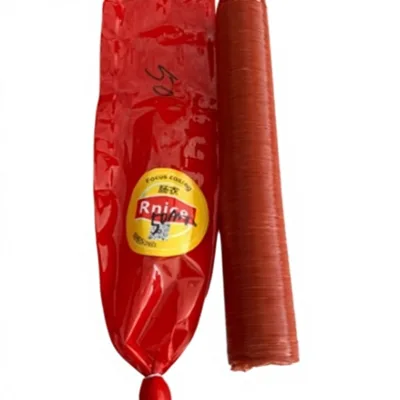
The observed product attributes highlight significant variability in physical characteristics, which buyers must carefully match to their production lines. Specifications include diameters ranging from 13mm to 36mm, with specific listings noting 30mm, 46mm, 50mm, and even larger sizes like 55mm to 60mm. Lengths are often sold in long rolls, with observed options including 55, 70, 84, 95, 110, and 125 feet. Color options are extensive, ranging from transparent and light smoky to caramel, red, blue, black stripes, and brown, allowing for visual differentiation of product lines. Buyers should verify that the selected diameter and length are compatible with their stuffing and linking equipment to avoid operational bottlenecks.
Technical Specifications to Verify
Diameter and length consistency are paramount for ensuring smooth operation on high-speed sausage stuffing machines. Buyers must verify that the casing’s inner diameter matches the desired sausage size within tight tolerances, as deviations can lead to uneven stuffing, air pockets, or casing rupture during the cooking process. The observed standard calibers of 13mm to 36mm provide a baseline, but custom specifications are available. It is crucial to confirm the actual measured diameter of the sample batch, as nominal sizes may vary slightly between manufacturers. Additionally, the length of the roll should be sufficient to minimize changeovers, but not so long that it becomes unwieldy or difficult to store in existing facilities.
Color and smoke flavor integration are key differentiators for cooked smoked cellulose casings. The casing must impart a consistent smoky appearance and flavor without leaching into the meat or causing discoloration during processing. Buyers should request samples to test the color stability under various cooking conditions, such as boiling, steaming, or smoking. The observed color options, including light smoky and caramel, suggest that suppliers offer different aesthetic profiles. It is important to verify that the smoke flavor is derived from approved food-grade sources and that the colorant does not migrate excessively, which could affect the final product’s visual appeal and regulatory compliance.
Compliance and Safety Documentation
Food safety certifications are non-negotiable when sourcing cellulose casings for human consumption. Buyers must verify that suppliers hold valid HACCP, ISO, FDA, and BRC certifications, as these indicate adherence to rigorous quality management and food safety standards. The presence of these certifications suggests that the manufacturing facility has implemented controls to prevent contamination and ensure product consistency. However, buyers should not assume that all listed certifications apply to every product variant; it is essential to confirm that the specific casing type and batch are covered under the supplier’s current certification scope.
Regulatory compliance extends beyond certifications to include ingredient transparency and labeling requirements. Buyers should request a full ingredient declaration for the casing, including any colorants, smoke flavorings, or plasticizers used in the manufacturing process. In many jurisdictions, cellulose casings are considered food additives or packaging materials, and their composition must comply with local food safety regulations. Suppliers should provide documentation confirming that their products meet the relevant standards for edible casings, including limits on heavy metals, residual solvents, and microbial counts. This documentation is critical for maintaining compliance during audits and inspections.
Cost Drivers and Commercial Terms
Pricing for cellulose casings is influenced by several factors, including raw material costs, production complexity, and order volume. The observed price range of $0.03 to $0.25 USD reflects these variables, with higher prices likely associated with custom colors, specific smoke flavors, or smaller order quantities. Buyers should analyze the total cost of ownership, considering not just the unit price but also shipping, handling, and storage costs. Consolidating orders to meet MOQ thresholds can significantly reduce per-unit costs, but buyers must balance this with inventory holding costs and shelf life constraints.
Commercial terms such as payment methods, delivery schedules, and return policies also impact the overall procurement strategy. Buyers should negotiate clear terms regarding lead times, especially for custom orders that may require additional production time. It is important to establish a process for handling defective goods, including criteria for rejection and procedures for returns or credits. Suppliers should provide detailed packing information, such as the use of paper cartons or sealed carton packaging, to ensure that casings are protected during transit. Understanding these commercial dynamics helps buyers optimize their supply chain and mitigate financial risks.
Supplier Qualification and Quality Control
Supplier qualification involves a thorough assessment of manufacturing capabilities, quality control processes, and financial stability. Buyers should conduct on-site audits or request third-party audit reports to verify that the supplier’s facilities meet international standards for hygiene and production efficiency. The observed origin of products from China and Henan province indicates a concentration of manufacturing hubs, but buyers should not rely solely on geographic location to assess quality. Instead, focus on the supplier’s track record, customer references, and ability to provide consistent product quality over time.
Quality control measures should be integrated into the procurement process, including regular sampling and testing of incoming casings. Buyers should establish acceptance criteria for key attributes such as diameter, thickness, color, and tensile strength. Implementing a statistical process control (SPC) approach can help identify trends and potential issues before they impact production. Suppliers should provide certificates of analysis (CoA) for each batch, confirming that the product meets specified parameters. Regular communication with the supplier regarding quality performance can foster a collaborative relationship and drive continuous improvement.
Long-Term Procurement Checks
Sustainable sourcing practices are increasingly important in the procurement of cellulose casings. Buyers should evaluate suppliers’ environmental policies, including waste management, energy usage, and sustainable sourcing of raw materials. While cellulose is derived from plant-based sources, the processing chemicals and energy intensity of production can have environmental impacts. Suppliers who demonstrate a commitment to sustainability may offer long-term benefits, such as reduced regulatory risks and enhanced brand reputation. Buyers should inquire about any eco-friendly initiatives or certifications that the supplier may hold.
Continuous monitoring of market trends and technological advancements is essential for maintaining a competitive edge. The cellulose casing industry is evolving, with new innovations in flavor delivery, color stability, and ease of removal. Buyers should stay informed about these developments and assess whether new products or suppliers could offer better value or performance. Regularly reviewing supplier performance and market conditions allows buyers to adapt their sourcing strategies and maintain a resilient supply chain. By proactively managing these long-term factors, buyers can ensure a steady supply of high-quality cellulose casings that meet their evolving business needs.
FAQs
What certifications do these cellulose casings hold?
These cellulose casings hold HACCP, FDA, ISO, and BRC certifications. This ensures compliance with international food safety standards for sausage production. Buyers can verify these credentials to meet regulatory requirements in various export markets. The documentation supports quality assurance processes for large-scale manufacturing operations.
Can I customize the diameter of the casings?
Yes, customization is available for these cellulose casings. The standard calibers range from 13mm to 36mm, with specific diameters like 30mm, 46mm, and 50mm also listed. Buyers can request specific sizes to match their sausage production lines, ensuring a precise fit for various product types.
What is the shelf life and storage requirement?
The shelf life exceeds 12 months when stored under normal conditions. This long duration allows for flexible inventory management and reduces waste. Standard storage methods are sufficient, making it easy to integrate into existing warehouse protocols without requiring specialized climate-controlled environments.
What packaging options are provided for these casings?
The casings are packaged in paper cartons or sealed carton packaging. This method protects the product during transit and storage. The single package size is approximately 15x5x5 cm with a gross weight of 0.15 kg, facilitating efficient handling and stacking in logistics operations.
What processing methods are suitable for these casings?
These casings are suitable for both sausage making and fried processing. They are designed to withstand various cooking techniques while maintaining structural integrity. The clear or light smoky color options allow for aesthetic flexibility in the final product presentation for different consumer preferences.
What is the minimum order quantity for these casings?
The minimum order quantity ranges from 1000 to 10000 units. This flexibility accommodates both small batch producers and large industrial buyers. The pricing varies between 0.03 and 0.25 USD per unit, depending on the specific order volume and customization requirements requested by the buyer.